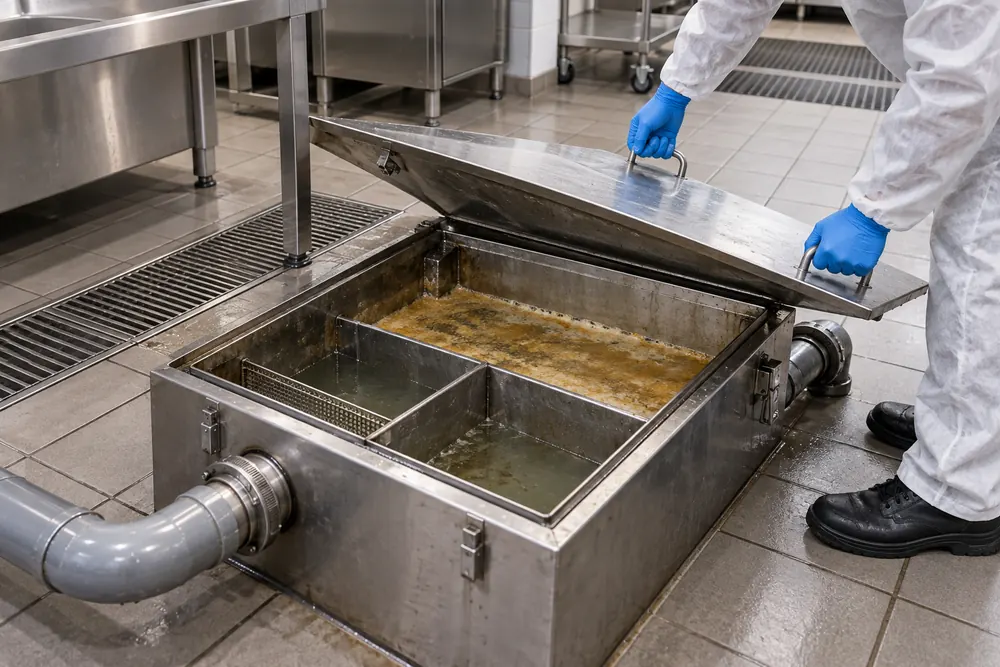
Why A Grease Trap Needs Cleaning
A grease trap separates some fats and food material from kitchen wastewater before it reaches downstream drainage. Retained material takes up space and can reduce performance as it accumulates. Slow sinks, unpleasant odours or grease appearing downstream may indicate a problem, but you should not wait for symptoms before inspecting the unit.
Keep a record of its condition between visits. Actual use, menu, equipment and food handling practices all influence how quickly material builds up.
What A Cleaning Visit Includes
The agreed scope should identify the unit, access arrangements and the material to be removed. Cleaning normally involves opening the accessible interceptor safely, removing retained grease and solids, and checking accessible components before returning the unit to service in line with its instructions. An inspection may reveal damaged baffles, poor seals or other concerns that cleaning will not solve.
Ask for findings to be recorded so maintenance decisions are based on the equipment condition.
Preparing The Kitchen
Locate the interceptor and find its product information if available. Tell us whether it is indoors, beneath a sink or outside, and whether access requires moving equipment. Agree a suitable interruption to kitchen wastewater use before work begins.
Separate the work area from food preparation and discuss hygiene arrangements with the person responsible for the kitchen. Do not leave staff to improvise disposal of the removed contents. Access restrictions are easier to resolve before attendance.
A Practical Cleaning Process
First, confirm the interceptor location, type and safe working arrangements. Next, isolate relevant activity as agreed with the kitchen manager and gain access to the unit. Retained material is removed through the appropriate method and accessible surfaces and components are checked.
The unit is put back into service according to the manufacturer instructions. The handover should describe the condition found, any defects noticed, and the waste documentation provided for material removed from the premises.
Grease And Your Legal Responsibilities
Severn Trent explains that fats, oils and grease can restrict wastewater flow. Section 111 of the Water Industry Act 1991 addresses substances that interfere with public sewers. Its business guidance recommends practical grease management.
Cleaning a trap alone does not prove every discharge is acceptable. Where your business produces process wastewater, check whether trade effluent consent is needed with the sewerage company. The nature of the discharge matters, rather than simply whether the building contains a kitchen.
Waste Records And Disposal
Grease interceptor contents must be handled as the appropriate waste type. Ask who is collecting them, check the relevant waste carrier registration and request the correct transfer documentation. The government duty-of-care guidance explains business responsibilities for waste passed to others.
Keep records alongside cleaning reports so the premises manager can trace what happened. Do not dispose of grease trap contents into another drain, a yard gully or an unsuitable bin as a shortcut during maintenance.
What Affects Cleaning Cost
The size and design of the interceptor, the volume and condition of retained material and the ease of access affect the work. Restricted hours, long hose routes or a need to move equipment may change the plan. Waste transport and treatment should be understood in the quoted scope.
Share photographs and manufacturer details where possible. If the trap is not functioning properly, ask whether the proposal includes investigation or only cleaning, because those are different tasks.
Setting A Sensible Service Interval
There is no single cleaning interval that suits every commercial kitchen. Follow the manufacturer guidance and review actual grease and solids accumulation. Staff practices matter too, including scraping plates, keeping food solids out of sinks and collecting used cooking oil separately.
Record what is found at each visit and adjust the interval if kitchen demand changes. A cleaning record is useful evidence of maintenance, but it should sit alongside practical controls that reduce the load entering the trap.
Grease Trap Cleaning FAQs
How Often Should A Grease Trap Be Cleaned?
Grease trap cleaning frequency should follow the manufacturer guidance and the actual rate of grease and solids accumulation. Busy kitchens and different menus can produce very different loads. Inspect the unit and keep cleaning records, then adjust the interval to its condition.
Waiting for odours or a blockage can leave the kitchen with avoidable disruption.
Can We Use Chemicals Instead Of Grease Trap Cleaning?
Grease trap cleaning removes retained material that treatment products may leave in the system. Do not assume an additive replaces physical cleaning or makes a discharge acceptable. Follow the unit manufacturer instructions and discuss any treatment product with the relevant wastewater adviser.
Kitchen waste handling and documented maintenance remain part of managing grease effectively.