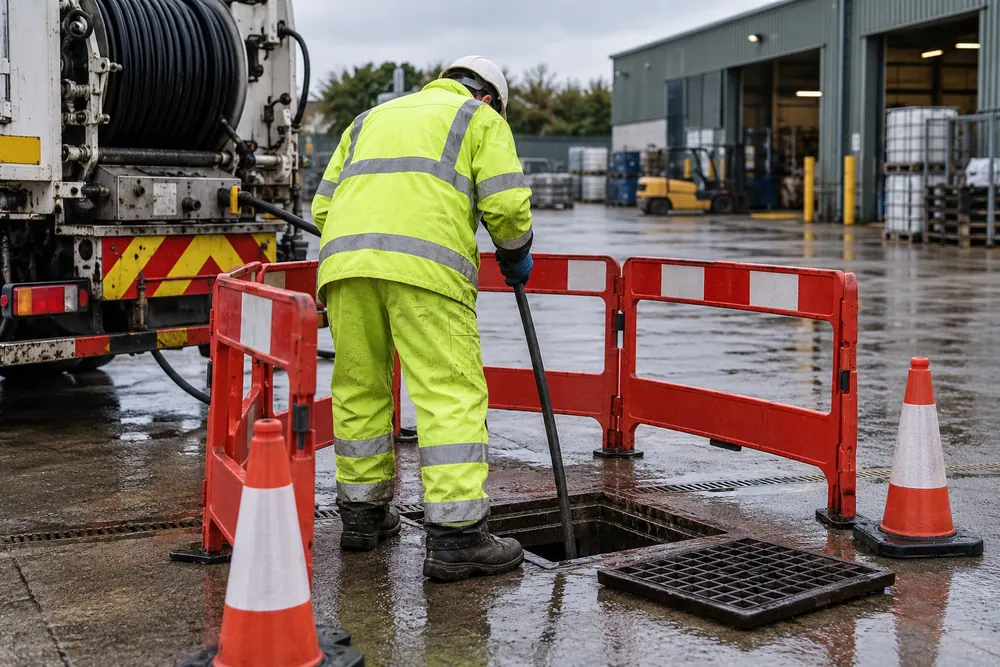
When A Blockage Needs Attention
A single slow basin may have a local trap problem. Several outlets backing up together can point to an obstruction further along the drainage run. Gurgling toilets, rising chamber levels and wastewater appearing at the lowest gully are useful clues.
Stop using affected fittings where this can be done safely. Keep staff and visitors away from contaminated water, and protect food preparation areas. Do not lift heavy chamber covers or enter a chamber to investigate.
What Commercial Clearance Involves
The aim is to remove the obstruction and establish whether the drain is flowing properly afterwards. Depending on access and pipe condition, the work may involve controlled rodding, mechanical cleaning or water jetting. Grease, wipes, silt and intrusive roots need different approaches.
A drain that briefly accepts water is not necessarily clear along its full length. We look for a practical explanation of the symptoms rather than treating every blockage as the same job.
A Step-By-Step Approach
First, describe which fittings are affected and when the problem began. Next, identify usable inspection points and any restrictions on the working area. The drainage route is checked as far as access allows before choosing equipment.
The obstruction is worked on in controlled stages, with displaced material managed appropriately. Flow is then checked from relevant outlets. If the blockage returns or the pipe condition remains uncertain, a camera inspection can establish the next step.
Clearing A Drain Is Not A Structural Repair
Cleaning can remove deposits but cannot straighten a displaced joint or rebuild a collapsed pipe. If rods meet an obstruction that cannot safely be passed, repeated force can make matters worse. Recurring trouble at the same location deserves investigation.
A CCTV drain survey can help distinguish residual debris from a damaged section. Any proposed repair should identify its location and explain why cleaning alone is unlikely to provide a lasting result.
Planning Around Your Premises
For a restaurant, the main concern may be keeping wastewater away from kitchen operations. For a warehouse, access across loading routes may need agreement with the site manager. Tell us about security gates, vehicle movements, opening hours and any permit-to-work arrangements before a visit is agreed.
If the drain is shared with other occupiers, notify the responsible facilities contact. A clear working area helps the assessment and reduces interruptions during the job.
Safety And Drain Ownership
Chambers can contain hazardous atmospheres, even when the opening looks shallow. The Confined Spaces Regulations 1997 prioritise avoiding entry where work can be done from outside. See the HSE guidance linked below.
Drain ownership also matters before authorising paid work. A pipe serving your premises may connect to a public sewer, and the position of a chamber alone does not establish responsibility. Check the lease, available drainage records and the sewerage company where ownership is unclear.
What Affects The Cost
The location of the obstruction, available access, pipe size and the equipment required all affect the scope. Costs can change if waste needs removal, a camera inspection is required, or work must be scheduled outside normal site access. Ask whether the proposed charge covers diagnosis, clearance and a flow check, and what happens if a defect prevents clearance.
We do not publish a price before the job is understood. Describe previous attempts so the same work is not repeated unnecessarily.
Reducing Repeat Blockages
Keep wipes and other unsuitable materials out of toilets, intercept food waste before washing up, and review grease management where kitchens discharge into the system. Record the affected drain, findings and work completed so the next investigation starts with useful information. Where silt or grease builds up predictably, planned cleaning may be more useful than repeated reactive call-outs.
The interval should follow actual site conditions and findings, rather than an arbitrary timetable.
Commercial Drain Unblocking FAQs
Can You Unblock A Drain Without Excavation?
Commercial drain unblocking can often be carried out through existing access points using rods or suitable cleaning equipment. Excavation may be needed if a collapsed or severely displaced section prevents safe clearance. The initial assessment should explain the likely method, its limits and whether a camera inspection is needed before a repair is proposed.
Why Does Our Commercial Drain Keep Blocking?
Recurring commercial drain blockages can result from deposits that were not fully removed, unsuitable materials entering the system or a structural defect. An inspection after cleaning can help separate these causes. Keep records of the affected outlets and previous visits, and discuss whether grease management, planned cleaning or a targeted repair would address the findings.